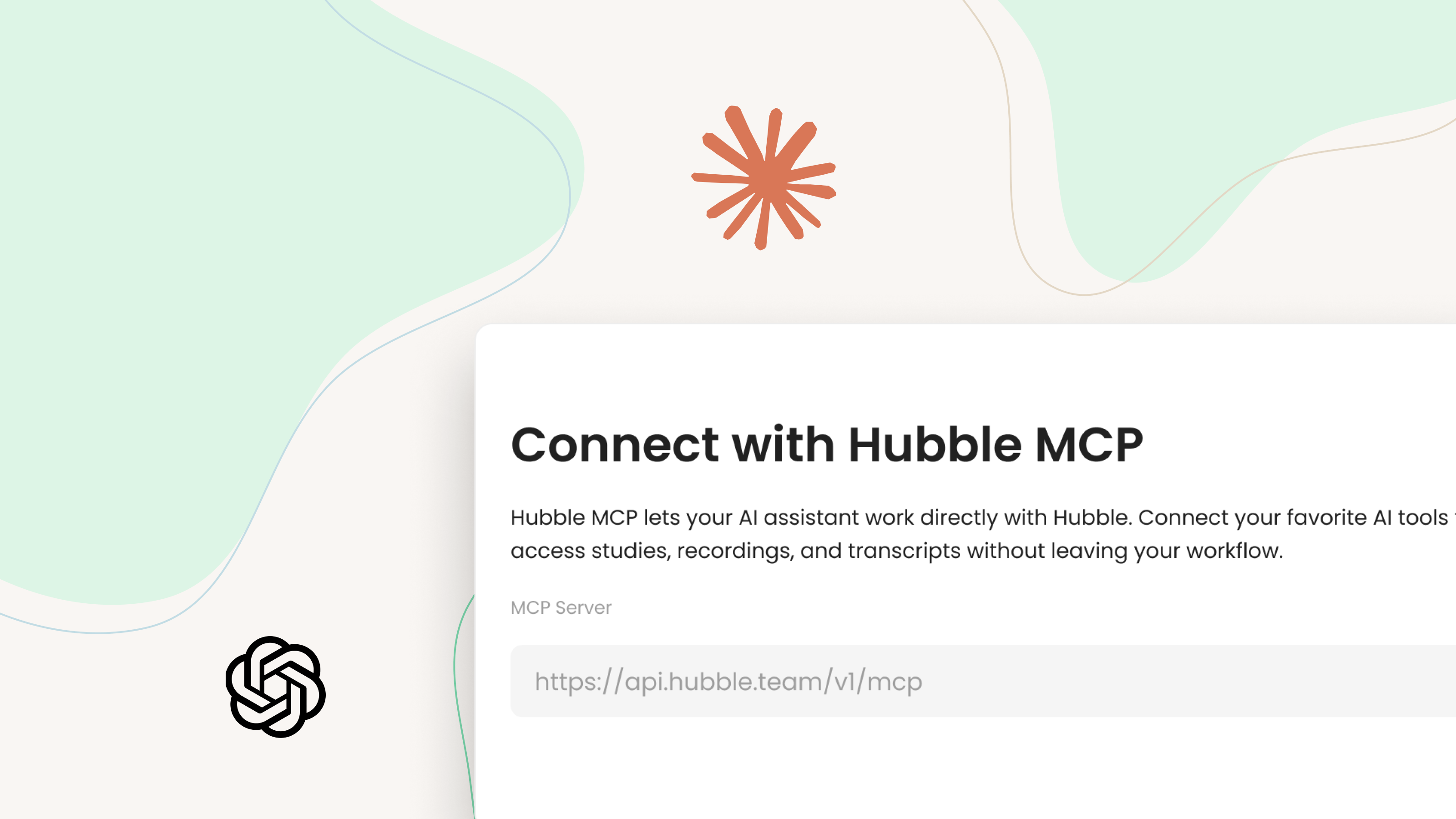
The Problem with Static User Research
For years, user research has been packaged into static outputs: reports, slide decks, highlight reels, and summaries. These outputs are valuable, but they are static after they are published. The moment a report is delivered, it begins to lose context. As new questions come up, stakeholders want to go deeper, and teams are left digging through hours of recordings or running new studies just to find answers that probably already exist.
.png)
Hubble MCP is designed to solve this problem by enabling a dynamic and more systemized way of accessing research data.
What's changing in user research with MCPs?
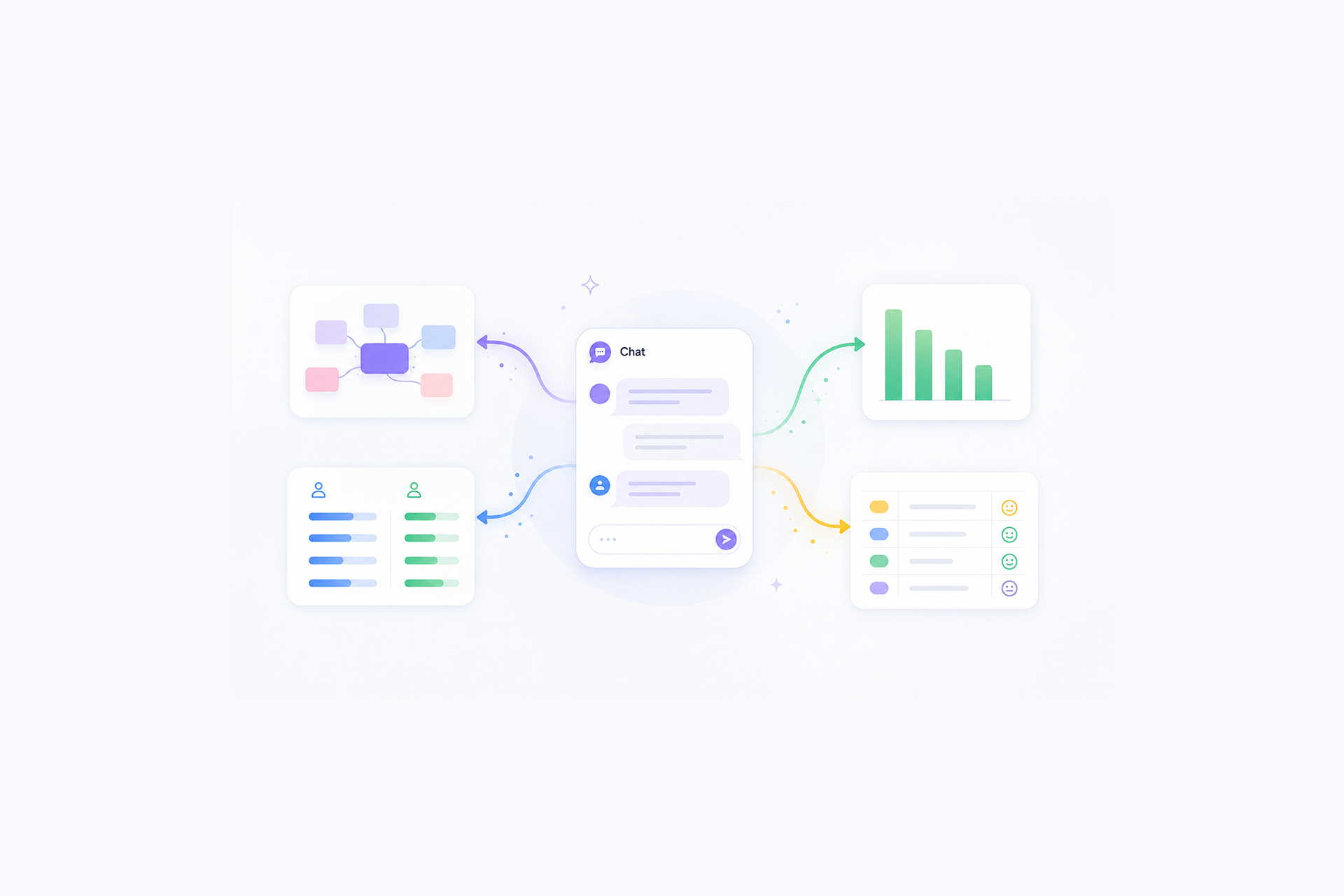
With Hubble MCP, research is no longer something you simply consume, it’s something you can actively engage with. Instead of digging through past studies, or trying to search through piles of archived research, you can ask questions directly across your entire research library. Whether it’s interviews, usability tests, surveys, or product feedback, MCP allows you to query and synthesize insights instantly, surfacing relevant patterns, themes, and supporting evidence in real time including source data like transcripts, clips, and notes.
.png)
Running Cross-Study Analysis
What makes this especially powerful is the ability to connect insights across studies. Traditionally, research data lived in silos. Each study was analyzed independently, and running cross-study synthesis has been very time-consuming. MCP changes that by allowing teams to identify patterns across multiple studies automatically, giving a more holistic and reliable view of user behavior over time.
This shift has major implications for how teams operate. First, it dramatically accelerates decision making because teams no longer need to wait on reports or dedicate hours to analysis. Second, it increases the ROI of every study you run as the research become part of a growing knowledge base that can be referenced and utilized continuously.

Cross-Functional Research
One of the most important benefits that MCP brings to the table is that it makes research truly cross-functional. Historically, access to research insights has been bottlenecked. Stakeholders rely on researchers to interpret findings, generate reports, and answer follow-up questions. While this ensures rigor, it also limits speed and accessibility especially in the age of AI as shipping velocities have increased significantly.
With MCP, anyone in the organization including product managers, designers, marketers and executives, can explore research directly. They can ask their own questions, follow their own curiosity, and get immediate answers without needing to go through a formal research request. This amplifies the research team's impact by making their work more accessible and reusable across the organization.
Unlocking Research Scalability
MCP also fundamentally changes how research scales. In the status quo, as your organization runs more studies, the volume of data grows rapidly. Without the right system in place, this data becomes increasingly difficult to manage and leverage. MCP turns that growing dataset into an asset rather than a burden. The more research you conduct, the more context MCP has to draw from, resulting in richer insights, stronger patterns, and more confident decision-making.
Under the hood, MCP is designed to work seamlessly with the rest of the Hubble platform. It builds on top of your existing workflows including AI-moderated interviews, usability tests, surveys, and moderated sessions, automatically structuring and indexing your research data so it’s ready to be queried at any time. There’s no additional setup required, and no need to change how your team runs studies today.
Building the Future of MCP-driven User Research
Ultimately, Hubble MCP represents a shift from research as deliverables to research as infrastructure.Instead of producing static outputs that age over time, teams can now build a living system of insights—one that evolves continuously, adapts to new questions, and becomes more valuable with every study. This is how research becomes faster, more scalable, and more impactful across the entire organization.
Link to MCP Webinar
how to set up the Hubble MCP Server
FAQs


Hubble MCP (Model Context Protocol) is a new way to interact with your research. Instead of relying on static reports, MCP lets you query, synthesize, and explore insights across interviews, usability tests, surveys, and more—directly within your favorite LLM platforms. It transforms your research data into a dynamic, interactive system that evolves with every new question.
MCP is built for everyone—not just researchers. Product managers, designers, marketers, and executives can all use it to explore insights, validate ideas, and make faster decisions. Researchers still play a critical role in designing studies and interpreting findings, but MCP extends the reach of their work—making it more accessible and scalable across the organization.
Hubble MCP (Model Context Protocol) is a new way to interact with your research. Instead of relying on static reports, MCP enables you to query, synthesize, and explore insights across interviews, usability tests, surveys, and other data directly within your favorite LLM platforms. It transforms your research into a dynamic, interactive system that evolves with every question you ask.
MCP is designed with transparency at its core. Every answer is grounded in your actual research data and includes traceability back to source materials like transcripts, video clips, and notes. This allows teams to verify insights, explore context, and build confidence in decisions.


.png)