Planning for your research is one of the most important steps in kicking off a project. The decisions you make up front including what questions to ask, who to recruit, and what scenarios to test determine the quality of the insights you'll get back after you're done with the research.
Nevertheless, most research plans are still written from memory.
Just as an example, imagine you're asked to evaluate a new onboarding flow. You begin drafting a study, even though your workspace may already contain several onboarding studies. One tested a nearly identical flow. Another surfaced the same friction point that's now being raised as a new issue. The evidence already exists but you just don't have it in front of you while you're planning.
That's the limitation of most research repositories. They're designed to help you retrieve research after it's been completed, not to help you plan your next study.
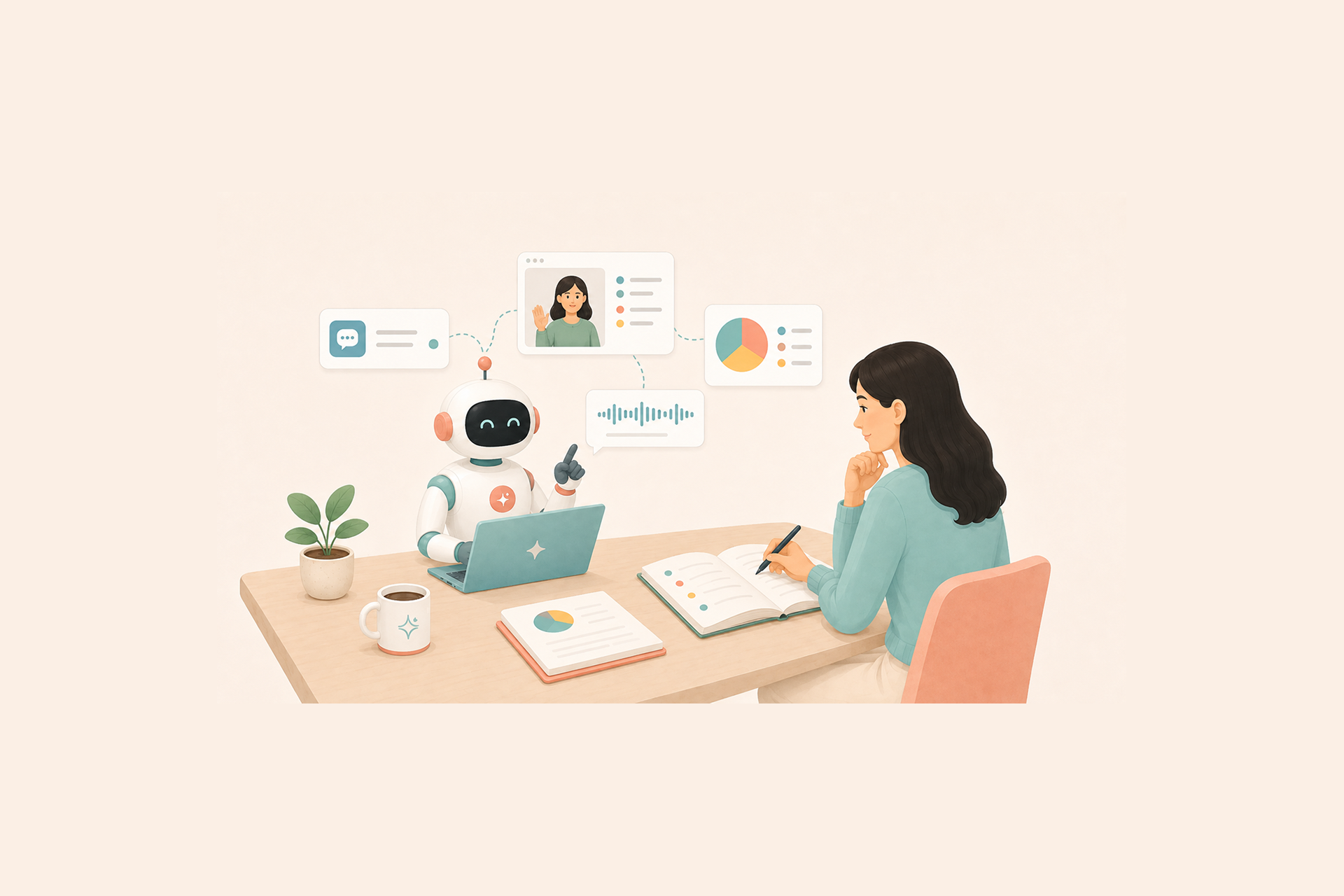
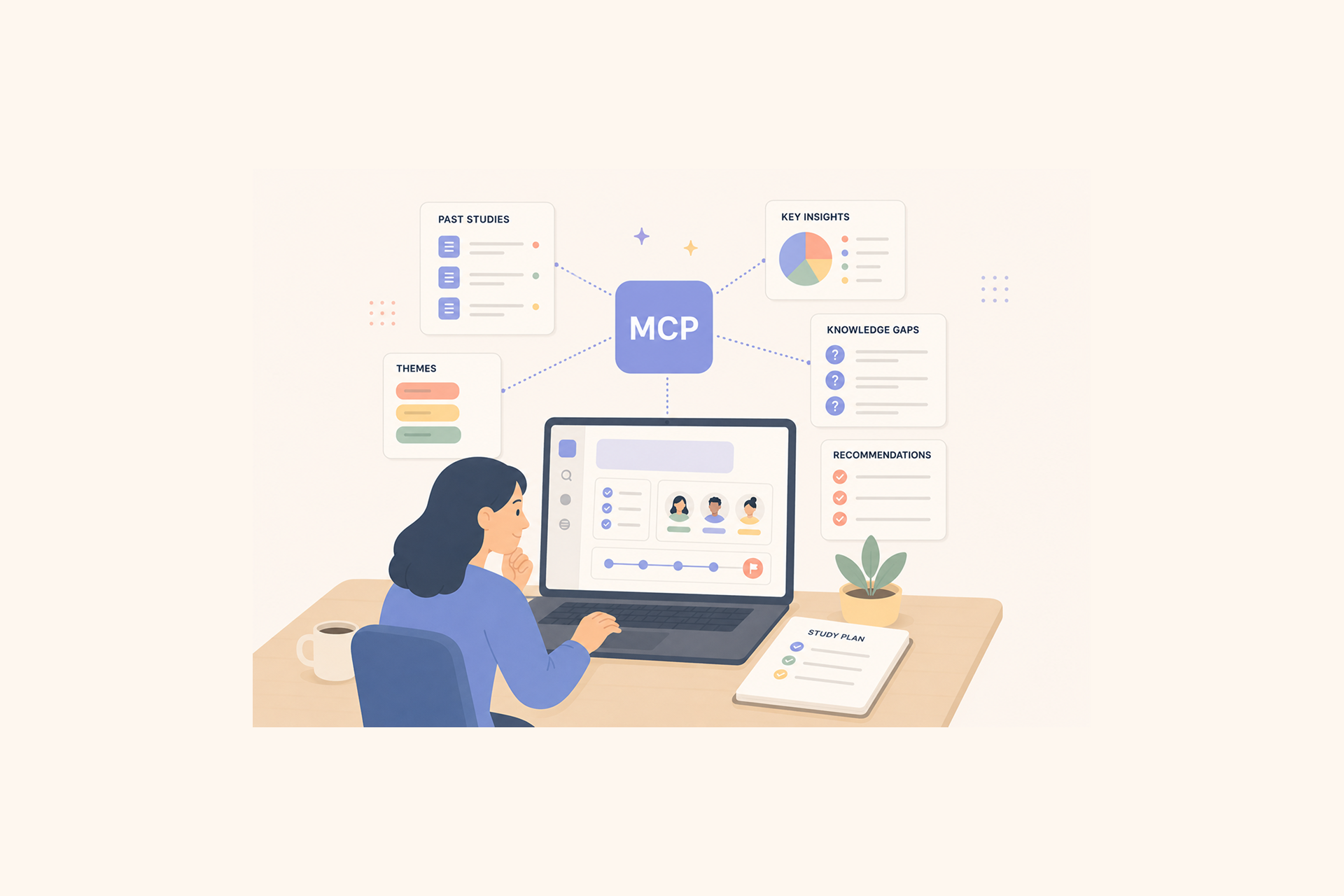
Hubble's new MCP integration changes that. By connecting Hubble to Claude, ChatGPT, or any MCP-compatible client, you can query your workspace directly for past studies, transcripts, notes, themes, and findings before you write your study plan. Instead of planning from memory, you plan from evidence and then create the study without leaving the conversation.
In this post, we'll walk through how that planning workflow works in practice.
What the MCP integration actually gives you
Once Hubble is connected as a connector in Claude or ChatGPT, the model can call a set of tools against your workspace. For planning, the ones that matter most are:
The important thing isn't the list. It's that reading your repository and writing a new study happen in the same place, so the plan you produce is downstream of what you already know.
Start with what your team already knows
Most research plans begin with the assumption that you're starting from scratch. In reality, you almost never are. Before writing a single objective, ask your repository what it already knows about the problem. Not "What should I research?" that usually produces generic advice. Instead, ask what has already been observed.
Search my Hubble studies for anything touching onboarding or first-run experience over the last year. For each one, tell me the core question it was trying to answer and what it concluded.What comes back is often enough to change the direction of the study. You might discover that two previous projects already answered part of the stakeholder's question, another challenged one of the assumptions in the brief, and a fourth collected useful evidence that never made it into a final report.
From there, ask one more question:
Which questions are already answered, which are partially answered, and which are genuinely still open?The answer is one of the simplest ways to improve a research plan. Instead of asking five broad questions, you might only need to investigate two. The resulting study is more focused, shorter for participants, and more likely to produce insights that actually move decisions forward.
Build on evidence, not assumptions
Once you know what gaps remain, the next question is how to investigate them. A repository shouldn't just tell you what happened. It should also help shape how you ask the next round of questions.
Looking at prior transcripts, for example, reminds you how participants actually described the experience—not how your product team talks about it. That's often the difference between writing tasks that feel natural and writing tasks full of internal terminology that participants have never heard before.
It also helps you recognize recurring participant segments, identify behaviors worth following up on, and avoid revisiting themes that have already been explored multiple times.
By the time you begin drafting the study, you're no longer planning from memory or stakeholder opinions. You're planning from the accumulated evidence your team has already collected.
Keep the plan with the study
Once the framing is clear, ask the model to draft the research plan directly inside Hubble rather than in a separate document.
Include the background, research questions, methodology, participant criteria, and—most importantly—the decision the study is intended to inform.
One habit we've found especially valuable is asking the model to justify each research question with evidence from previous studies. If a question can't be connected to an existing gap in knowledge or a stakeholder decision, it's worth asking whether it belongs in the study at all.
The result isn't just a better draft. It's a record of why the study existed in the first place, which becomes incredibly valuable six months later when someone else is trying to understand the findings in context.
Turn the plan into a study
With the plan in place, creating the study becomes the easy part.
The model can use the approved plan to generate a first draft of the study: warm-up questions, task-based activities, and follow-up prompts, directly in Hubble. Instead of copying objectives between documents, you're refining a draft that's already grounded in previous research.
That's where we think the right handoff happens. The agent is excellent at assembling a coherent first draft from everything your team already knows. Researchers still make the important decisions: reviewing the questions, refining the moderator guide, deciding who to recruit, and ultimately determining whether the study is ready to launch.
Where researchers still make the decisions
Using your repository to plan research doesn't make judgment less important. If anything, it makes judgment more valuable because you're spending less time gathering context and more time deciding what actually matters.
A few things we've learned while using this workflow:
- The quality of the output depends on the quality of your repository. If previous studies have well-written themes and summaries, the model can reason over them remarkably well. If they're missing, it falls back to transcripts and makes its own inferences. That's still useful, but it's not a substitute for conclusions your team has already validated.
- AI is good at generating research questions. That doesn't mean they're the right questions. Every objective should still trace back to a stakeholder decision or a genuine gap in your understanding. Just because a question sounds reasonable doesn't mean it's worth spending participant time answering.
- Launching a study should remain a human decision. Let the model draft the plan, build the study, and prepare the recruitment. Researchers should still review the discussion guide, approve the participant criteria, and decide when the study is ready to go live.
- Past research isn't automatically correct. Planning from your repository doesn't guarantee you're building on the truth. It simply ensures you're building on your organization's current understanding. Sometimes the next study exists precisely because you need to challenge what you thought you already knew.
For us, that's the real value of this workflow.
The goal isn't to automate research planning. It's to eliminate the repetitive work of reconstructing context every time a new project begins, so researchers can spend their time making better decisions instead of searching for information they already collected.
How to get started
Setting up the integration takes a few minutes. Once Hubble is connected to your LLM and the connector is enabled for your conversation, your workspace becomes something the model can actively reason over instead of something you have to search manually.
The first thing I'd recommend is simple: try it on a study you're already planning. Ask the model what your team already knows about the problem before you write a single objective.
If it surfaces a previous study, transcript, or insight that changes how you frame the research, you'll immediately understand why this workflow feels different. The repository stops being an archive you search after the fact and starts becoming an input into every new study you run.

FAQs


MCP (Model Context Protocol) is an open standard that lets AI assistants like Claude and ChatGPT connect directly to external tools and data. In user research, it means an assistant can query your research repository: past studies, transcripts, themes, and results, during a conversation, rather than requiring you to export findings and paste them in.
Start by asking your LLMwhat prior research already covers the topic, then classify your questions as answered, partially answered, or open. Draft the plan against the open ones, cite the prior studies that justify each, and write it into the study's Plan tab. From there, create_study turns the plan into a draft you review in Hubble.
Only when you connect Hubble as a connector and authenticate with your account. Your LLM plaforms reads studies, recordings, notes, themes, and results through defined tools scoped to your workspace permissions. Nothing is accessible until you connect it, and the connector can be toggled off per conversation.
No. It handles retrieval: finding and summarizing what your workspace already contains, which is the slowest and least skilled part of planning. Deciding which questions matter, who to recruit, and when a study goes live stays with the researcher, and drafts should be reviewed before anything is published.


.png)