Both platforms combine research methods, recruitment, and AI. Explore how they compare in study design, interview controls, and finding the right participants for your research.
“Hubble enables our team to collect high-quality research insights from the right target participants through a comprehensive set of user research capabilities. By combining participant recruitment, moderated and unmoderated research, and AI-powered synthesis into a single platform, we've been able to streamline our research workflows, increase the speed of insight generation, and deliver rich actionable findings."


"Media-rich surveys" available
Heatmaps, advanced analytics, and recordings
Heatmaps and recordings


Configurable image exposure time
Combine research tasks and survey questions
Combine tasks and media-rich questions


Write primary questions and follow-ups
Define questions and research objectives
Works with image files and while participants interact with live apps


Hubble Participant CRM
Dscout Private Panels


Dscout Scout panel
Connect your Tremendous account
Through Private Panels


Through AI Studio


This comparison is published by Hubble and draws on publicly available product documentation and Hubble product information, reviewed in October 2026. It is not an independent hands-on benchmark. Features may require specific plans, modules, or configurations. “Not verified” means the capability was not confirmed in the documentation reviewed.
Choose a study that reflects your team’s everyday research. Test the workflow from recruitment to reporting, and decide which parts of your research program make sense to move.
Review your methods, recruitment needs, and stakeholder expectations. Identify where Hubble fits your usability testing, interviews, and surveys, and whether diary studies need to remain in Dscout.
Review available exports, participant attributes, consent requirements, and discussion guides. Work with our team to confirm what can be imported and what needs to be recreated in Hubble.
Launch a representative study in Hubble. Evaluate the participant experience, AI-assisted analysis, and reporting with your team before expanding to more projects.
Hubble brings usability testing, AI-moderated interviews, surveys, and participant recruitment into a connected product research workflow. Dscout offers overlapping methods, with particular strengths in diary and longitudinal studies that capture experiences over time. The right choice depends on the studies your team runs and the controls you need.
Hubble does not currently offer a dedicated diary-study workflow. Dscout supports repeated participant entries, multipart activities, and study pacing over time. If diary studies are central to your research program, Dscout is the stronger fit for that method.
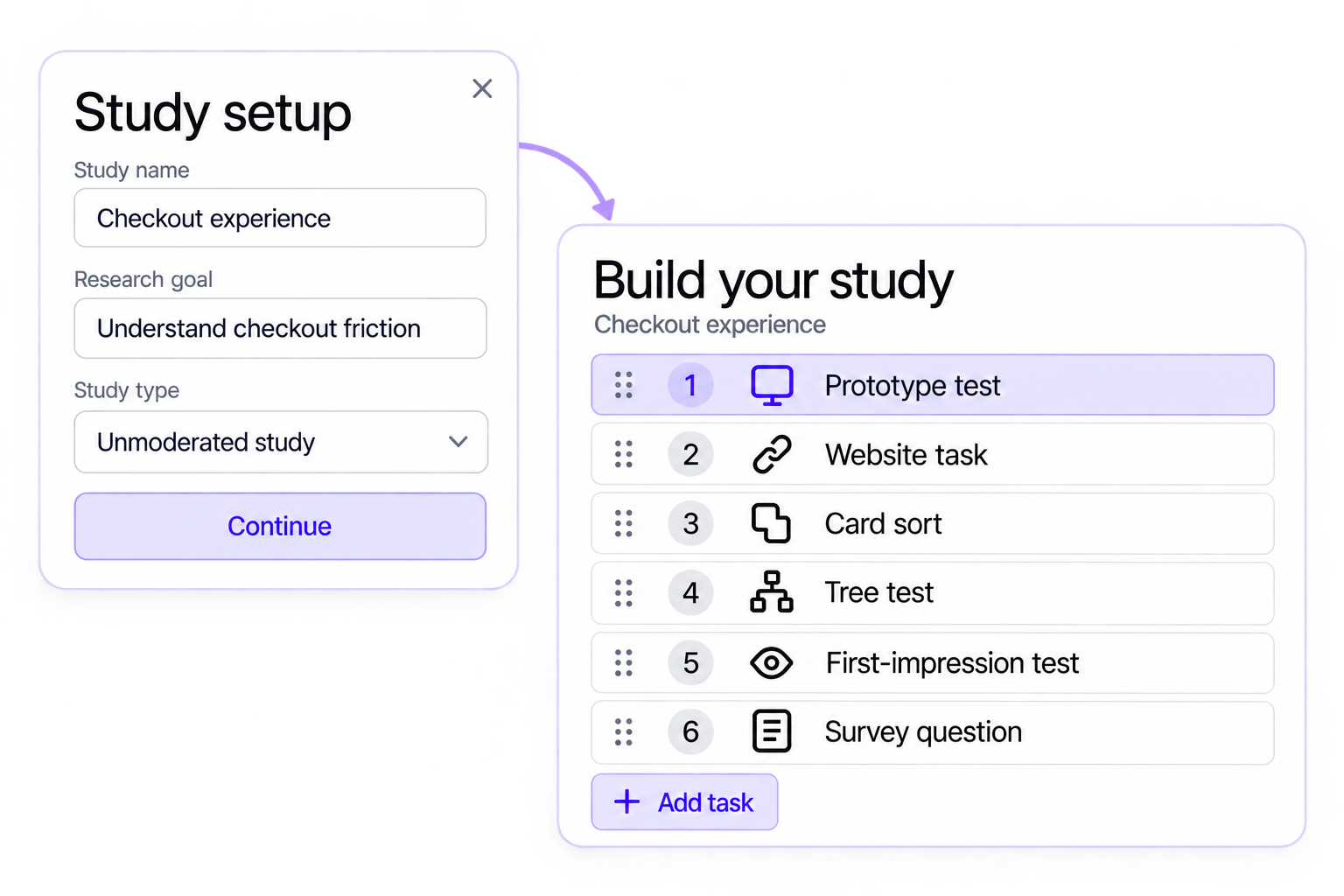
Both support prototype and live website testing, mobile testing, card sorting, and tree testing. Hubble lets you combine research tasks, timed first-impression tests, and survey questions in one study. Dscout also supports varied tasks and media-rich responses. Compare the task types, study logic, and results views your team needs.
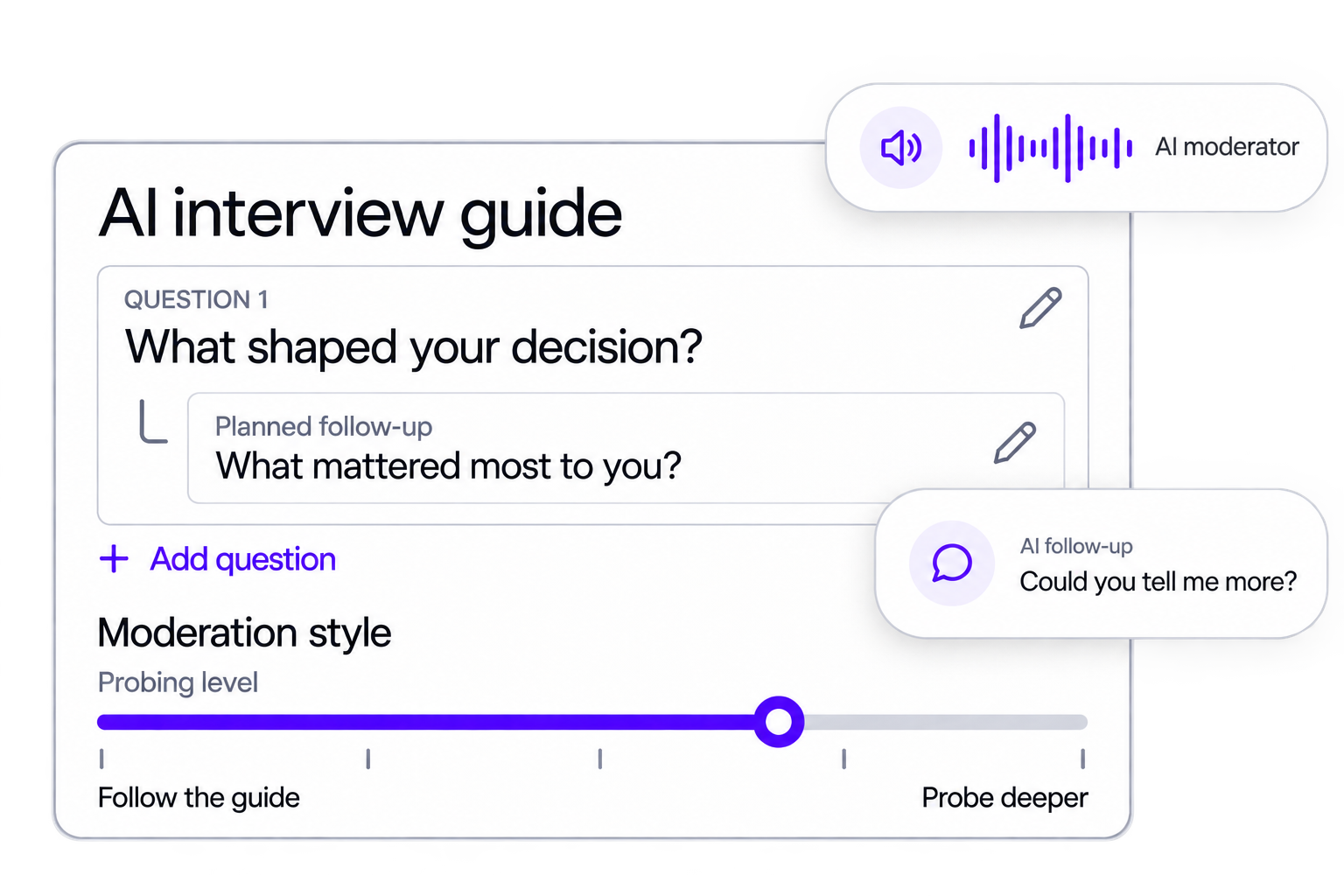
Yes. In Hubble, you can write primary questions and follow-ups, then choose whether the AI follows your guide strictly or probes deeper with its own questions. Dscout lets you define questions and objectives and configure AI probing depth. Both offer controls for shaping the conversation.
Yes. Hubble integrates with User Interviews and Respondent, and its participant CRM lets you manage your own contacts and connect Tremendous for payouts. Dscout offers its Scout panel, partner recruitment including Respondent, and options for bringing your own participants. Dscout also supports Tremendous through Private Panels.
Yes. Both offer MCP connections with read and write capabilities. Hubble supports workflows such as creating study plans, building and publishing studies, launching recruitment, and analyzing findings. Dscout supports building and launching usability studies, recruiting participants, and analyzing results through MCP, available with AI Studio.
Hubble offers seat-based or study-based proposals. Dscout offers custom subscriptions with consumable credits. To compare costs, request quotes for the same research volume, methods, recruitment needs, incentives, and team access. Confirm which AI capabilities and security controls are included in each proposal.
Start with a representative usability study, interview, or survey. Review which participant information and study materials can transfer, and confirm what needs to be recreated. Run the study from recruitment through reporting before moving more projects. If you rely on diary studies, account for that workflow separately.