RESEARCH METHODS & STUDY DESIGN
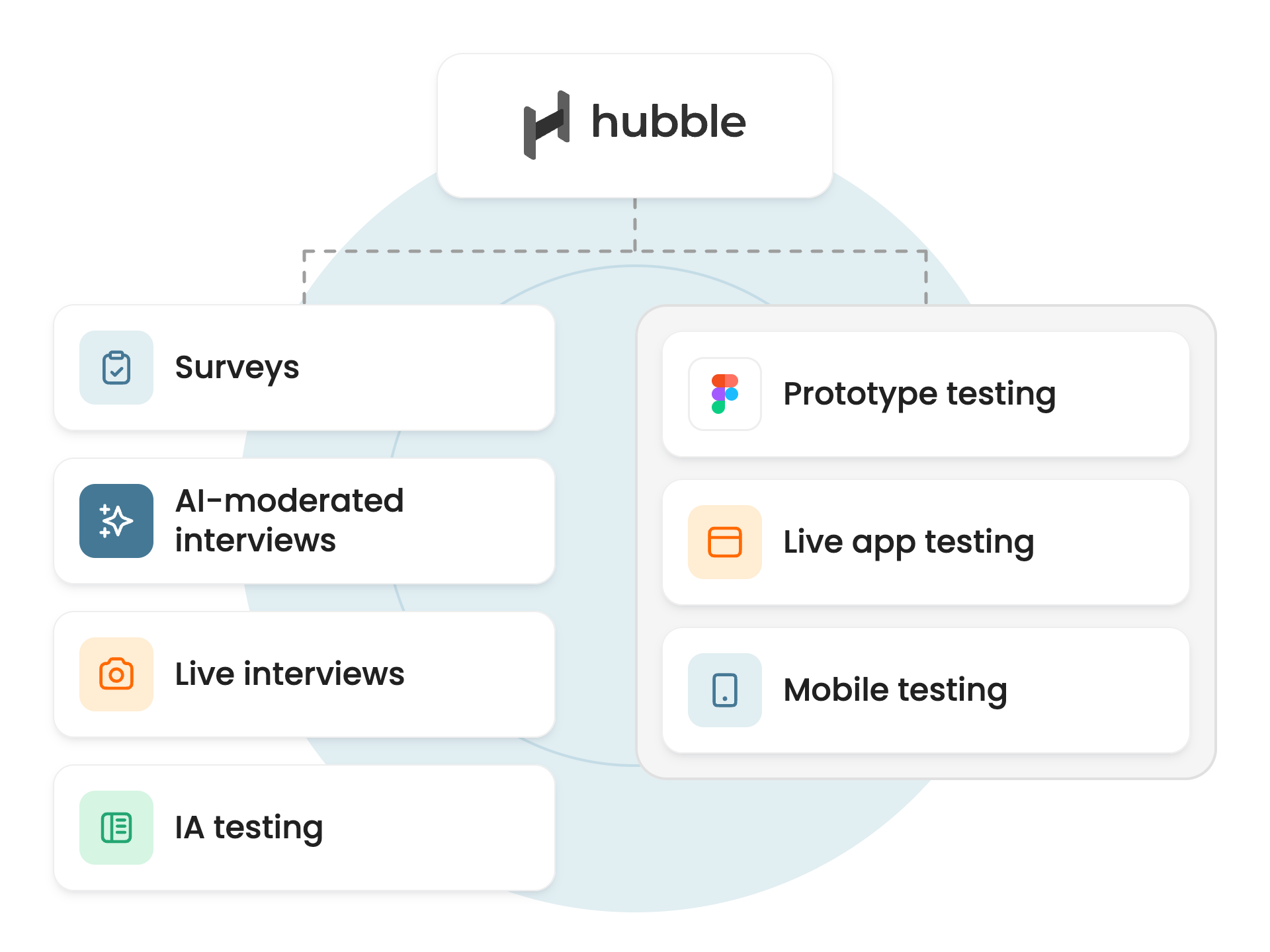
AI-moderated interviews
 Custom guides, adaptive follow-ups, and visual stimuli
Custom guides, adjustable probing, and visual stimuli Live moderated interviews
Moderated studies with participant scheduling Live interviews with recording, AI notes, and stakeholder observation Native survey builder
Standalone surveys and questions within broader studies −Import surveys from external tools for analysis
Dedicated Figma prototype testing
Prototype tasks with heatmaps, recordings, and navigation analysis Prototype feedback within AI interviews; dedicated task analytics not verified
Dedicated live website testing
Website tasks with participant recordings Website feedback within AI interviews; embedded URLs must be supported
Dedicated mobile testing
Mobile testing and screen recording −AI interview prototype testing requires a desktop browser
Card sorting
Native card-sorting tasks −Can analyze card-sort results imported from supported tools
Tree testing
Native tree-testing tasks −No native tree-testing study builder
Timed first-impression testing
Configurable image exposure time −No native timed first-impression task
Multiple research tasks in one study
Combine usability tasks, survey questions, and AI interviews Interview guides can include questions and prototype feedback
In-product feedback
Surveys and NPS prompts triggered by events and user attributes Live Intercept for in-context qualitative feedback PARTICIPANT RECRUITMENT & MANAGEMENT
Bring your own participants
Integrated external participant recruitment
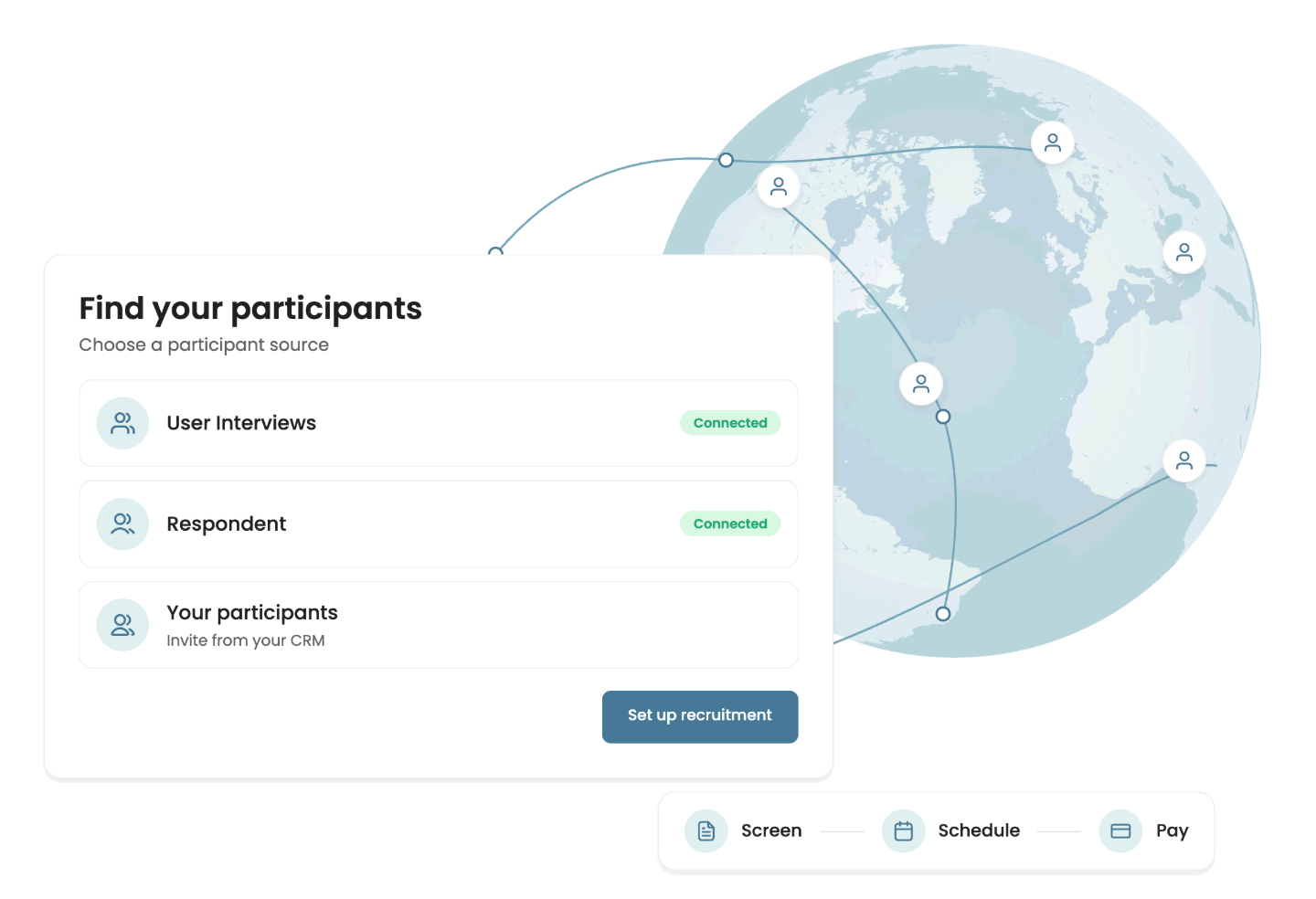
Recruit through User Interviews and Respondent −Recruit externally and distribute Marvin study links
Panel targeting and screening
Audience targeting and custom screeners through recruitment integrations Managed through external recruitment providers
Panel incentive payouts
Manage payouts within the recruitment workflow Managed externally; completion redirects support panel tracking
Participant CRM / contact management
Profiles, attributes, segments, and participation history Research Panel with participant records, custom fields, and cohort filters ANALYSIS & KNOWLEDGE MANAGEMENT
Recording transcription and AI summaries
AI-assisted themes and reporting
Analyze responses and generate study reports Analyze interviews and imported feedback; create insight reports Behavioral usability analysis
Prototype heatmaps, navigation analysis, and recordings Interview recordings and imported usability data; equivalent native metrics not verified
Research organization and retrieval
Organize studies and search findings across studies through MCP
Centralized Knowledge Hub with repository-wide search and Ask AI
Shared research taxonomy
Global tags and categories for organizing research Global tags and categories for organizing research Analysis of data from external tools
Custom upload recordings for advanced AI-assisted analysis Imports from survey, research, sales, and support tools Ongoing distribution of insights
Study reports and access to findings through MCP
Reports, clips, highlight reels, and topic subscriptions
AI CREATION & MCP WORKFLOWS
AI-assisted research setup
Generate studies and refine questions Generate and customize discussion guides MCP research retrieval
Search studies and retrieve cited findings Search customer knowledge and retrieve cited findings MCP write capabilities
Build and publish supported studies, launch recruitment, and analyze results
Create projects, discussion guides, and reports; update project overviews
PLANS & SECURITY
Free plan
Limited study responses and features Limited uploads and access to core features Paid pricing
Custom Enterprise proposals
Starter, Pro, and Enterprise; contact sales
SAML single sign-on
Enterprise Compliance add-on for Pro; included with Enterprise Role-based access controls