★★★★★
4.8 on G2 · 300+ research teamsAgentic user research system that plans studies, recruits participants, runs sessions and synthesizes findings
SOC 2 Type II · SSO/SAML · EU data residency · Your data is never used for training
Most teams ship faster than their research team can answer questions. Hubble closes that gap by making the work itself agentic — not by asking researchers to do more.
Scoping, screener writing, scheduling, note-taking, tagging, then a readout nobody reads twice.
Confident answers with no evidence behind them. Fast, plausible, and unaccountable.
Agents do the legwork against real participants. Every claim links back to the clip it came from.
The paradigm shift
Most teams are shipping faster than their research team can answer questions. Hubble closes that gap through a system of agents.
01
Before
Six weeks from question to deck
Scoping, screener writing, scheduling, note-taking, tagging, then a readout nobody reads twice.
02
Workaround
Teams guess, or dig for old research
Confident answers with no evidence behind them. Fast, plausible, and unaccountable.
03
With Hubble
From a study plan to an insights report in a day
Agents do the legwork to help you execute your research. Every theme and finding links back to clips and quotes from participants.
Each one stops for your approval at the moments that matter — the plan, the sample, the finding.
Write one sentence. The planning agent proposes the method, sample size, screener criteria and task flow, citing which past findings it's building on. You edit anything before it runs.
Understand why mobile users abandon at the payment step, and whether saved cards are implicated.
Unmoderated mobile usability test, 5 tasks, with 12 participants who dropped off in the last 30 days. Estimated fielding: 36 hours.
From your own users or Hubble's panel. The interviewing agent asks the follow-up question a good moderator would — “what did you expect to happen there?” — and escalates to a human when a session goes off-script.
 Paid out
 Applied
 Applied
 Invited
Themes are clustered across every session, scored for confidence and prevalence, and merged into the findings you already have. Click any sentence to watch the clip behind it.

Pick the method that fits the question — or let an agent pick it for you. Findings land in the same place, cited the same way, whichever route you take.
Tasks, prototypes and live sites run on the participant’s own time. Screen, voice and click paths are captured together and tagged before you open them.
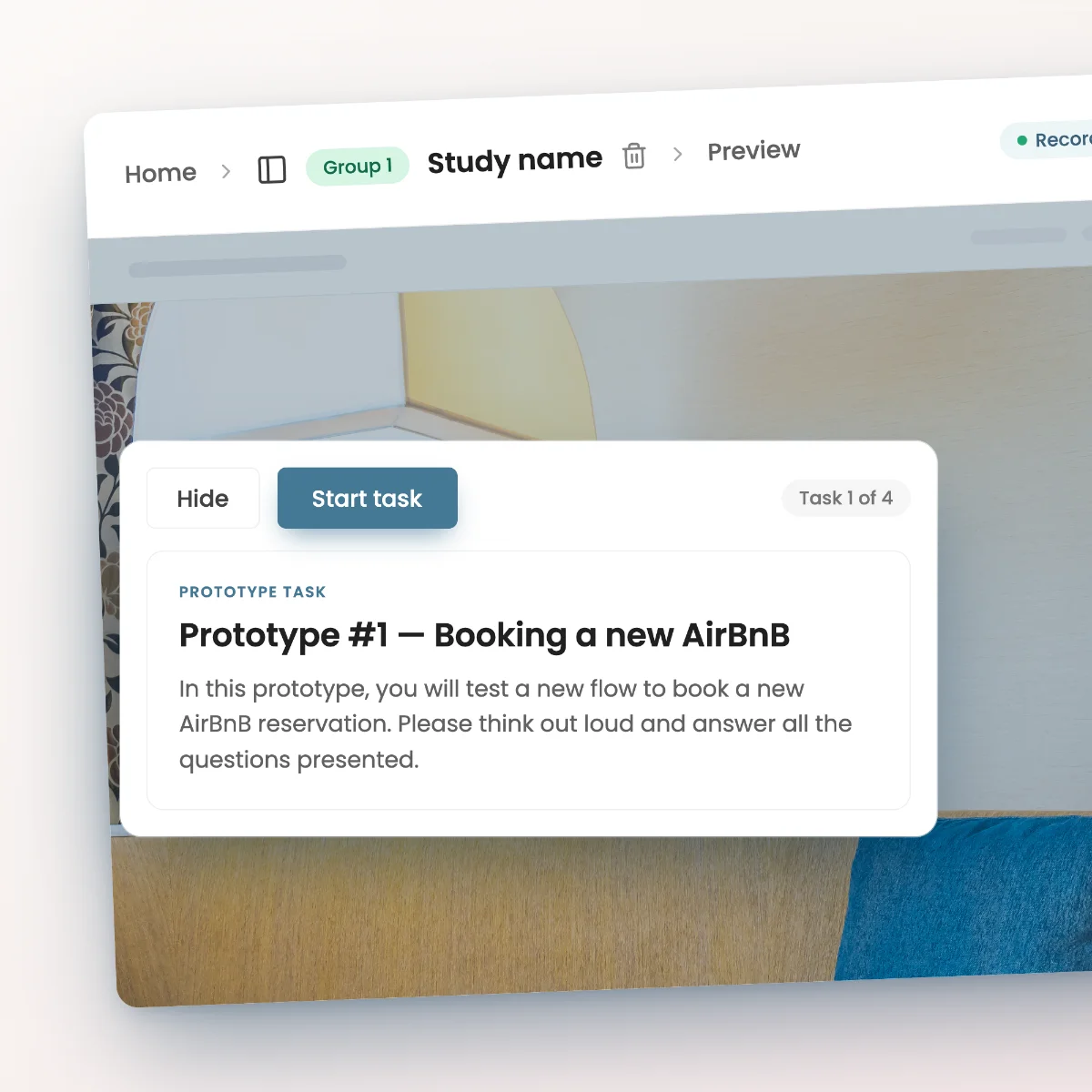
An agent runs the conversation live, probes the interesting answers and follows your discussion guide — so you can talk to forty people instead of six.
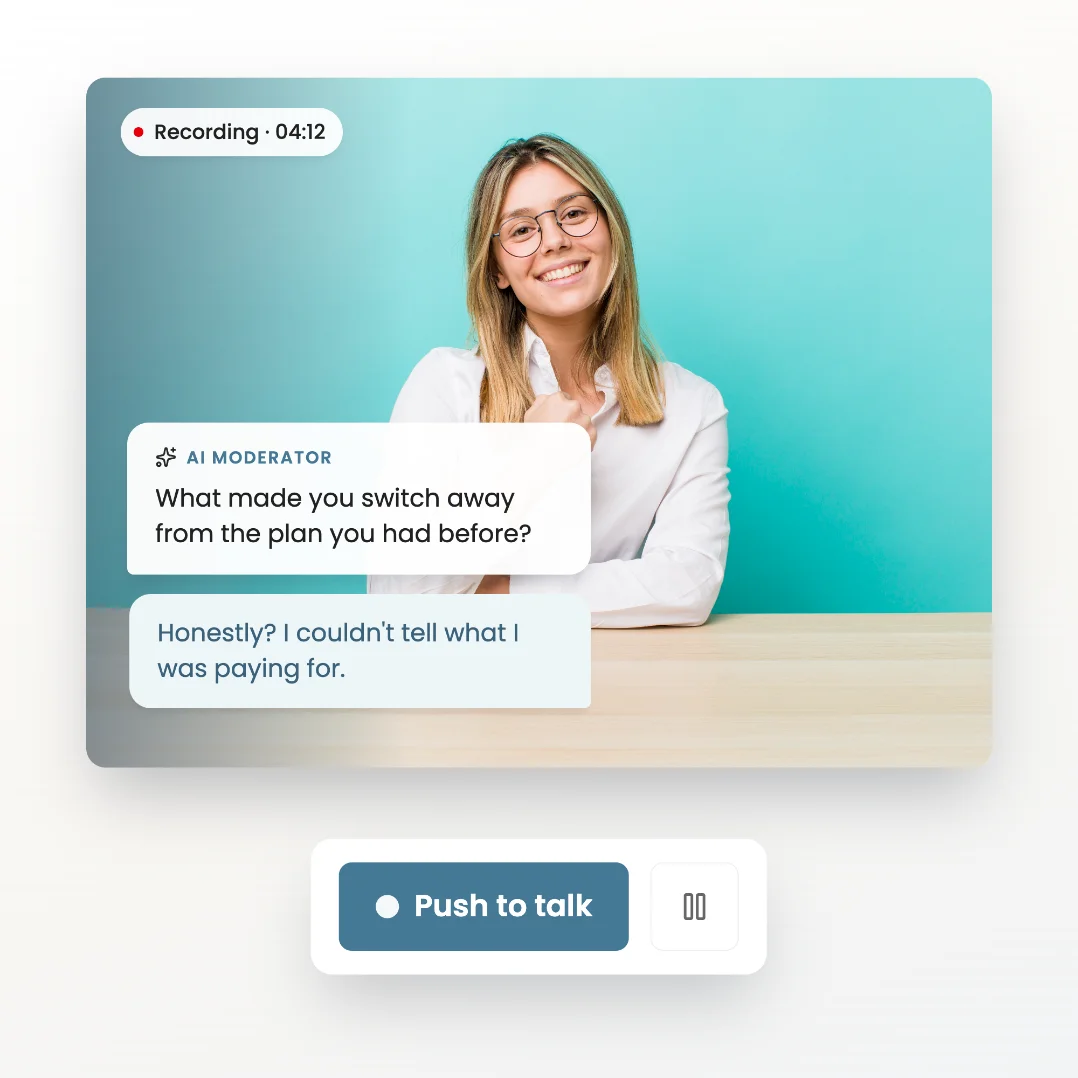
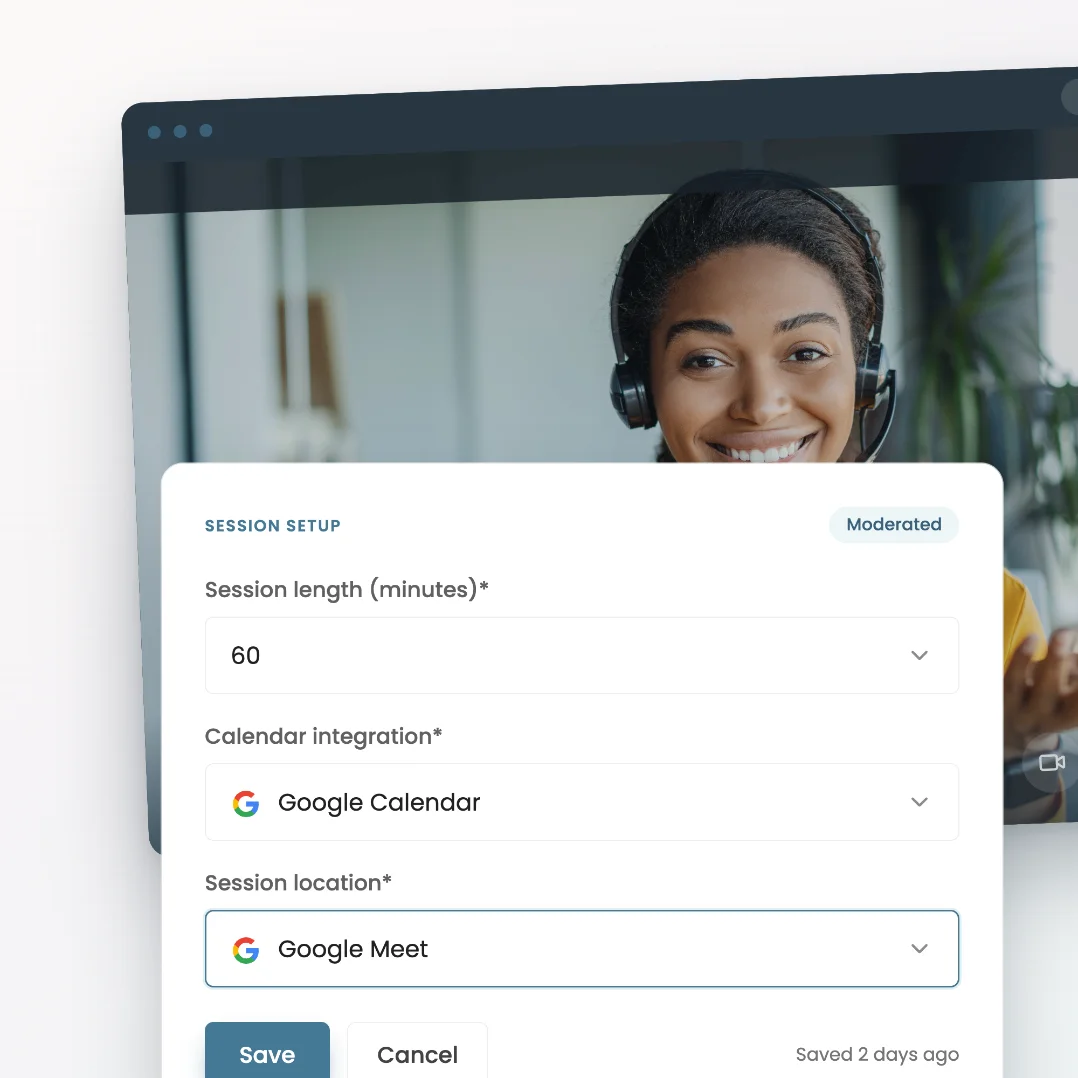
Run moderated research sessions to understand what your customers need. Recruit, schedule and host in one flow — notes, tags and timestamps are written for you.
Reach your own users or the Hubble panel. Open-ended answers get coded into themes instead of dumped into a spreadsheet for someone to read on a Friday.
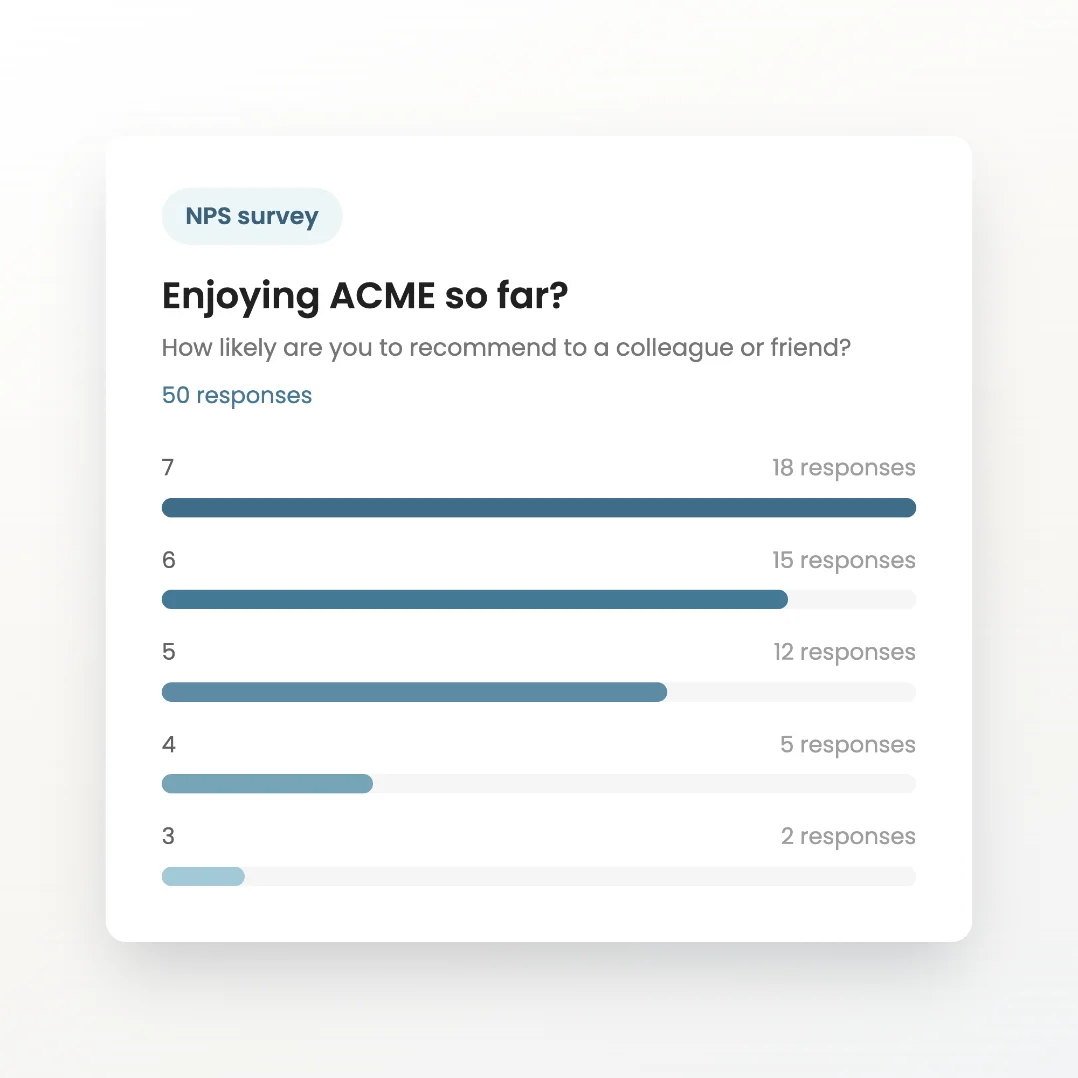
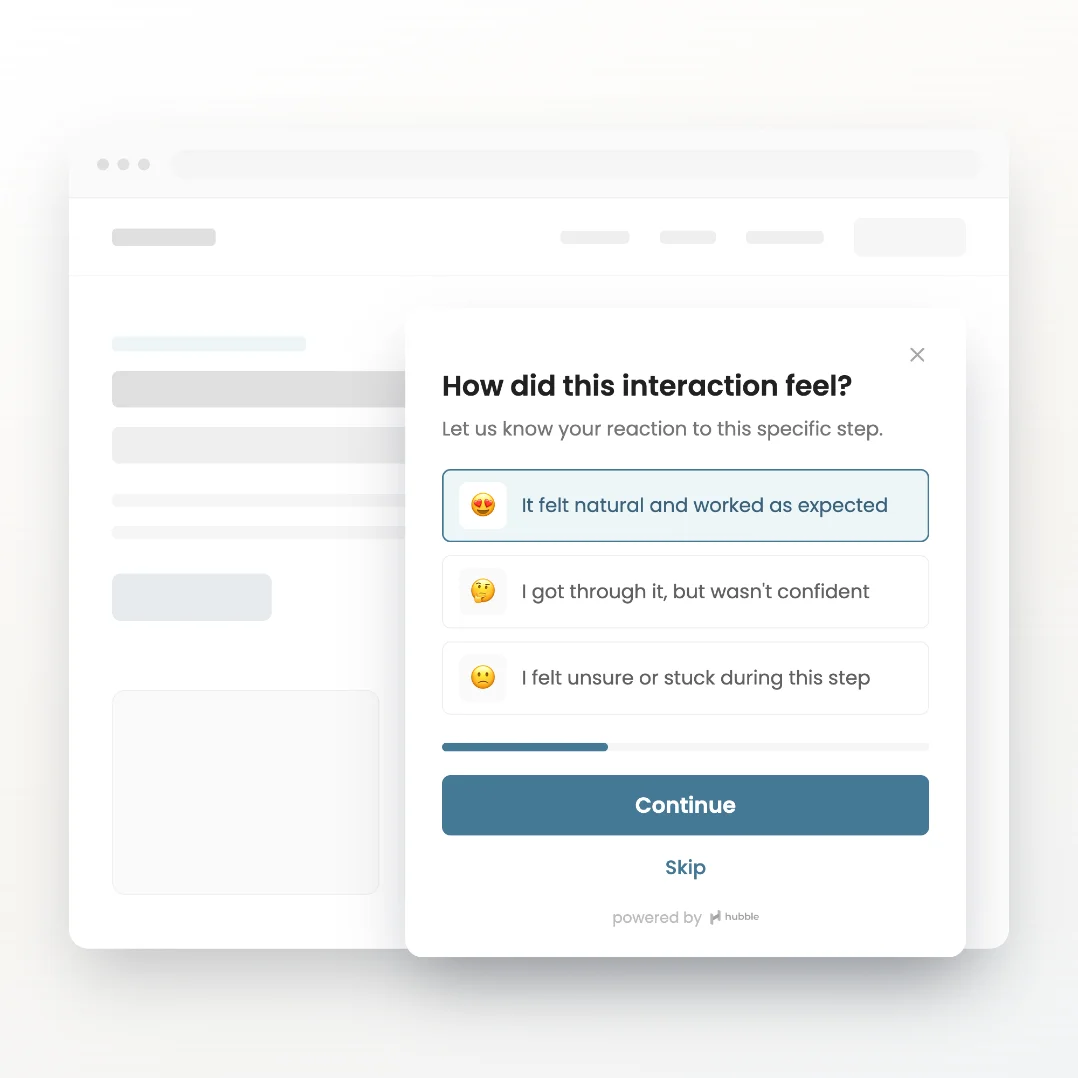
Trigger a single question from inside your own app, in the seconds after the thing happened. Always-on signal from the people already using the product.
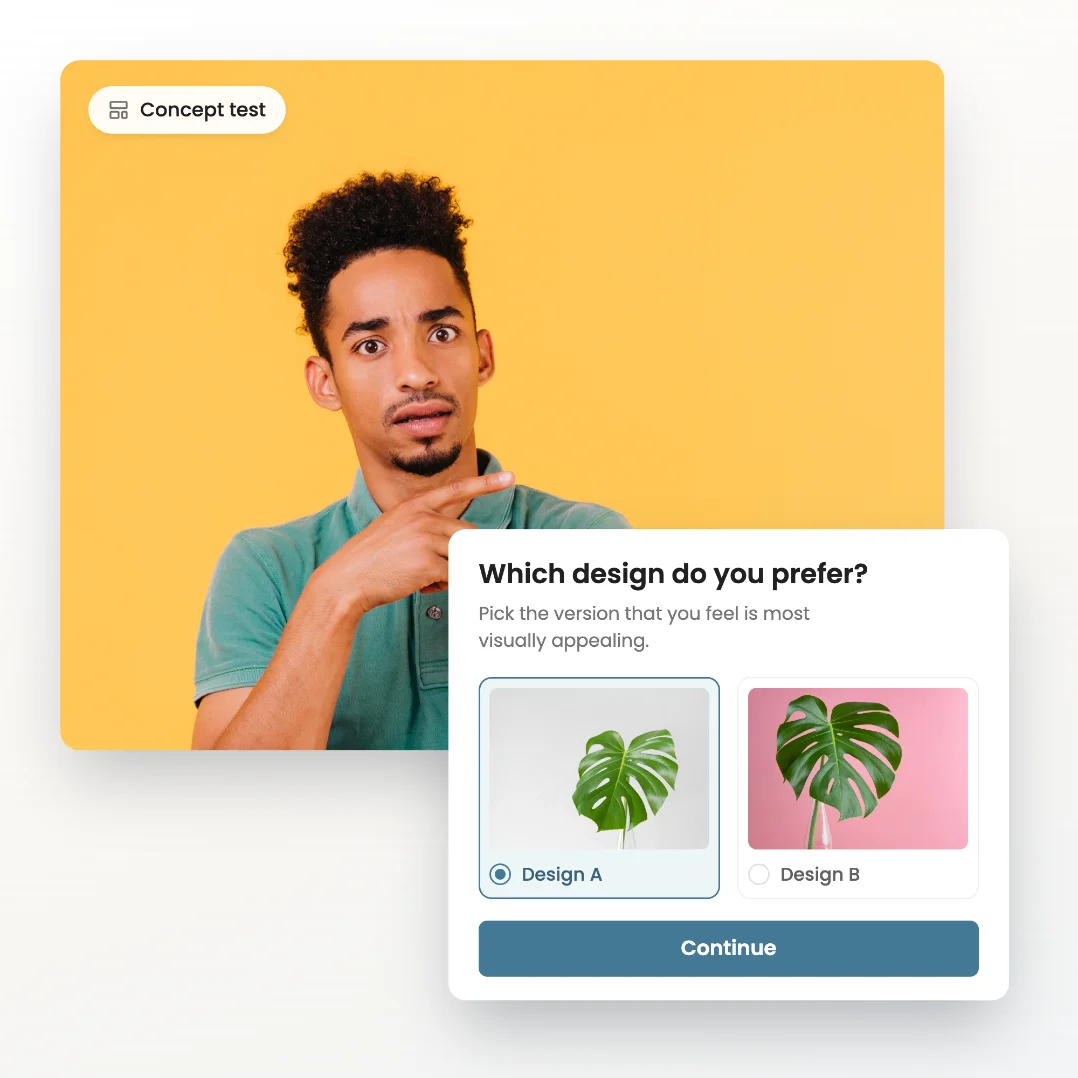
Longitudinal check-ins, card sorts and concept tests — the generative work that tells you what to build before there is a prototype to test.
Every agent action is attributable, reversible and bounded by the permissions you set. Nothing goes to a participant without a human approval you configured.
Choose which steps an agent may take alone — per team, per study type.
Automatic redaction in transcripts and clips, with configurable retention windows.
Every prompt, tool call and edit logged and exportable to your SIEM.
SOC 2 Type II, SSO/SAML, EU residency. Never used to train models.
Agent runs and participant incentives are billed separately, at cost.
For one product team getting started with agentic studies.
For research orgs supporting many product teams at once.
For regulated teams with procurement and residency requirements.
In 30 minutes we'll run it live against real participants and show you the findings — with your own product, not a demo account.